
Does the thought of sitting in a dental chair make your heart race? You’re not alone! Dental anxiety is common, and for some people, it can make even routine appointments feel overwhelming. Fortunately, sedation dentistry can help patients feel calmer and more comfortable during dental procedures.
There are several types of sedation, and the right option depends on factors such as your anxiety level, medical history, the procedure you’re having, and your overall health. Understanding the differences can help you start a conversation with your dental provider about what may work best for you.
What Is Sedation Dentistry?
Sedation dentistry uses medication to help patients relax during dental treatment. Depending on the method, sedation may range from mild relaxation to a deeper level of reduced awareness. Local anesthesia is often used alongside sedation to numb the treatment area and prevent pain.
Sedation may be helpful for people with dental anxiety, a strong gag reflex, difficulty sitting still, or a need for lengthy or complex procedures. However, not everyone needs sedation, and different methods come with different considerations.
Your dental provider will review your medical history, medications, allergies, and treatment needs before recommending an approach.
Nitrous Oxide Sedation
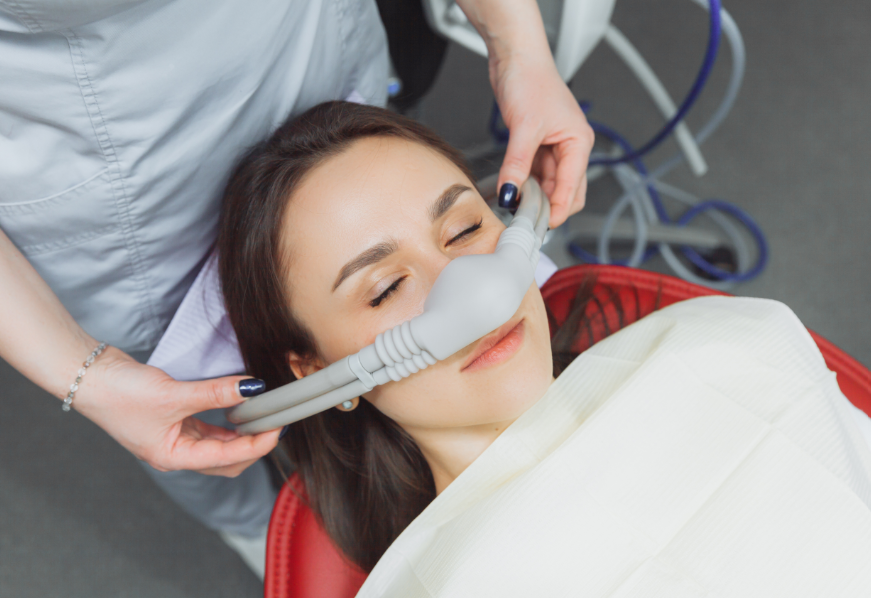
Nitrous oxide, commonly called laughing gas, is a mild form of sedation delivered through a small mask placed over your nose. You breathe a mixture of nitrous oxide and oxygen throughout treatment, helping you feel relaxed while remaining awake and responsive.
This option may be suitable for patients with mild to moderate dental anxiety, a sensitive gag reflex, or concerns about a shorter procedure. Its effects generally begin quickly and wear off soon after the gas is discontinued, allowing many patients to return to normal activities shortly afterward.
Nitrous oxide is often appealing to people who want help relaxing without feeling heavily sedated. Your provider will determine whether it’s appropriate based on your health, ability to breathe comfortably through your nose, and other individual factors.
Oral Sedation
Oral sedation involves taking a prescribed medication before your appointment to help reduce anxiety. Depending on the medication and dose, you may feel drowsy, relaxed, or less aware of the procedure. You typically remain responsive, although some people remember little of the appointment afterward.
Oral sedation may be an option for patients with more significant dental anxiety or those who need help relaxing during longer procedures. However, its effects can take time to develop and may last for several hours after treatment.
Because oral sedation can impair coordination and judgment, you’ll generally need a responsible adult to accompany you and drive you home. Follow your provider’s instructions carefully, including any guidance about eating, drinking, and taking your regular medications.
IV Sedation
Intravenous (IV) sedation delivers medication directly into a vein, allowing the dental team to adjust the level of sedation as needed. It can produce a deeper state of relaxation than nitrous oxide or many oral sedation approaches, although the exact effect depends on the medication and dosage.
IV sedation may be appropriate for patients with severe dental anxiety or those undergoing lengthy, complex oral surgery. Patients are monitored throughout treatment to help maintain their safety.
Recovery takes longer than with nitrous oxide, and you’ll need someone to drive you home and stay with you as instructed. IV sedation also requires careful evaluation of your medical history and may not be suitable for everyone.
How Do You Choose the Right Type?
The best sedation option is the one that fits your comfort level, procedure, and medical needs. Your provider will explain the benefits and risks of available methods, discuss any necessary preparations, and review what to expect during recovery.
Be sure to share any health conditions, medications, previous experiences with sedation, or concerns you have about dental treatment. This information helps your care team make a safer, more personalized recommendation.
You deserve dental care that feels manageable and supportive. A conversation about sedation can be the first step toward a more comfortable experience.
About the Practice
Sheng Ji, DDS, MD, Oral & Maxillofacial Surgery in Fair Oaks, California, provides specialized oral surgery and anesthesia services with a strong emphasis on patient comfort and safety. Dr. Sheng Ji is a board-certified oral surgeon with training in both medicine and dentistry. The practice offers several sedation options, including nitrous oxide, oral conscious sedation, IV sedation, and general anesthesia, helping patients feel more comfortable during dental procedures and oral surgery.
Call us at (916) 961-1902 or schedule your appointment online