
Sinus Lift – Fair Oaks, CA
Preparing the Upper Jaw for Dental Implants

Dental implants are often an ideal solution for missing teeth, acting as replacement roots to serve as the foundation for a smile that looks and feels natural. However, Dr. Ji may find that certain preliminary surgical procedures are required before you can get dental implants. One such procedure that might be needed when replacing teeth in the upper jaw is a sinus lift. Reach out to our Fair Oaks office today to learn more about this treatment and why it might be essential for successful dental implants.
Why Choose Sheng Ji, DDS, MD Oral & Maxillofacial Surgery for Sinus Lifts?
- Surgeon Dual-Trained in Dentistry and Medicine
- Multiple Sedation Options to Ensure Patient Comfort
- Friendly and Professional Team Members
Indications for Sinus Lifts

There are multiple reasons why a sinus lift might be necessary. In some cases, it might simply have to do with the natural anatomy of your skull. The upper jaw tends to have less bone compared to the lower jaw, and as a result, there often isn’t a sufficient level of bone density for implant surgery.
Another common issue is bone loss in the area where dental implants need to be inserted. Bone loss can be a consequence of gum disease, but it can also be due to the lack of stimulation that the jawbone suffers when teeth have been missing for a long time.
Finally, there are times when the sinus cavity may be too close to the upper jawbone. Trying to insert dental implants under these circumstances could cause them to protrude into the sinuses.
Sinus Lift Surgery
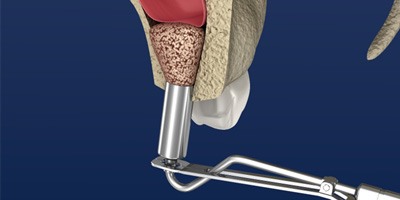
After numbing the area, Dr. Ji will open your gums and create a small window in the underlying bone. He will then lift the membrane lining the sinuses up and away from the jawbone so that grafting material can be placed. Said grafting material is often bone taken from elsewhere in your body, but it can also come from a donor. Once the material is in place, Dr. Ji will close the gums.
Most patients notice some mild swelling and bleeding in their mouths following a sinus lift procedure. This is completely normal and can be managed with medication.
A follow-up appointment will typically be performed to make sure that your mouth is healing properly. It can take anywhere from four to nine months for the mouth to completely recover after a sinus lift. We can perform dental implant surgery once the healing process is complete.
Sinus Lift FAQs
What Can I Expect While Recovering from a Sinus Lift?
Most people are back to feeling normal within 1 – 2 weeks of their sinus lift surgery. In the meantime, you will need to adhere to some post-op instructions to reduce the risk of complications. For example, you should be careful to avoid blowing your nose, and you should minimize your exposure to anything that might make you sneeze. You should also take medications as prescribed, eat a soft diet, and avoid strenuous physical activity.
Before you leave our office, our team will provide you with a detailed list of post-op instructions that will help to support your body’s natural healing process. Of course, you are welcome to call us if you run into concerns or questions.
Does Sinus Lift Surgery Come with Any Risks?
Just like any other medical procedure, there are a few risks attached to sinus lift surgery. The biggest risk is that a sinus membrane will be torn or punctured. Usually, such issues can be repaired with stitches or a patch. If the repair is more complicated, your surgeon might stop your sinus lift and let you heal before performing the procedure again.
Other potential risks include infection and a failure of the grafted bone to bond with the surrounding tissue.
Keep in mind that the chances of you experiencing a serious complication are quite low. Dr. Ji and our team take every precaution to keep our patients safe!
When Should I Seek Help after a Sinus Lift?
You will have a follow-up appointment approximately one week after your surgery. However, you should call us sooner if you experience symptoms such as:
- An increase in swelling in your mouth, cheek, or under your eye after 3 days.
- Discharge of small graft particles from your nose.
- An unexpected flow of liquids between your nose and mouth.
- Signs of infection, such as redness or pus at your surgical site, fever, or extreme discomfort.
What Are the Benefits of a Sinus Lift?
Although sinus lift surgery might seem a bit intimidating or even scary, it can actually be something to look forward to!
Its biggest benefit is that it can make you a candidate for dental implants, which can restore your bite and beautify your smile. This surgery can also restore jaw strength. Additionally, it is relatively safe, with serious complications happening only in very rare cases.
Who Should Perform My Sinus Lift Surgery?
Many oral surgeons and other dental specialists offer sinus lift surgery. A simple Google search can reveal a lot of options! Be sure to carefully read reviews of any practice you are thinking about visiting. You should also investigate each doctor’s credentials.
Dr. Ji has a strong reputation for performing oral surgeries, including sinus lifts, with great care and attention to detail. He often works alongside local dentists to make sure patients have a positive treatment experience from beginning to end,
When Do You Need a Sinus Lift?
Patients who are seeking to replace missing teeth with dental implants, but whose sinuses are too near the jaw, may require a sinus lift. After losing teeth in the back of the upper jaw, the bone can begin to resorb over time, causing the sinuses to expand into the empty space. Without sufficient bone height to raise the sinuses, dental implants won’t have the proper support necessary for success.
What Happens Before a Sinus Lift Surgery?
Before starting the surgery, your oral surgeon will have to determine where they will get the bone grafting material. This can come from either somewhere in your body or mouth, or from a donor. The grafting material can also be used from sterilized donated bone particles to guarantee the optimal standards of safety and quality. They’ll also take X-rays of your mouth to study your sinuses and jaw to plan exactly what you’ll require for the treatment.
What Happens During the Procedure?
Similar to other surgical treatments, your oral surgeon will begin by administering a local anesthetic so that you are pain-free throughout your appointment. They can also provide you with sedation dentistry so that you are as relaxed and comfortable as possible during the procedure. Then, your oral surgeon will create an incision in your gums to reveal the area of your jawbone where the dental implant will be placed. They will then make a movable flap in the jawbone that can be carefully pressed to lift the sinus. Afterward, they will fill the empty space under the cavity with grafting material to promote healthy bone growth. Once your treatment is completed, you will have your trusted friend or family member take you home so you can recover.
Can Sinus Lifts Be Done at the Same Time as Implant Placement?
In certain instances, both a sinus lift and dental implant placement can be completed in the same appointment. That said, this will only depend on the amount of bone material required and your unique healing ability. Your oral surgeon will discuss the appropriate approach for your situation with you before beginning the entire procedure.
What Are the Success Rates of Sinus Lifts?
In most cases, sinus lifts are highly effective treatments, typically with a success rate above 95%. Of course, the long-term success of dental implant placement following a sinus lift will be based on different factors, such as good oral hygiene, routine dental checkups, and keeping healthy oral habits daily.